ПЕРЕВОД СТАТЬИ
Кернос — сосуд для обрядовых подношений
Kernos
Авторы английской Википедии; перевод — Джанидея с помощью ИИ · 2026-09-13
Полный перевод открытой статьи об античных обрядовых сосудах: оригинал, примечания и иллюстрация.
Изображения из источника
Полный перевод
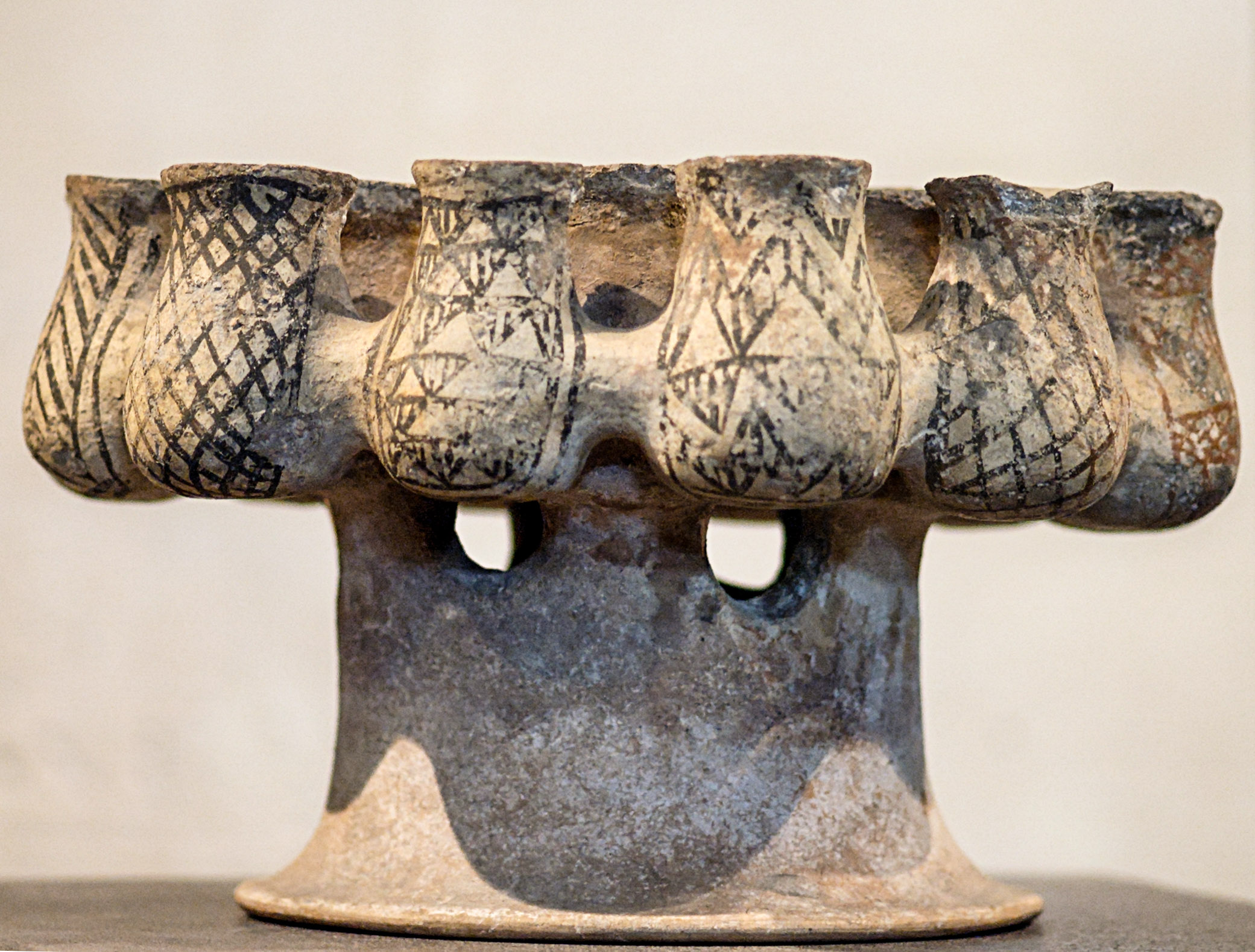
В типологии древнегреческой керамики кернос (греч. κέρνος или κέρχνος; множественное число — kernoi) — это керамическое кольцо или каменный поднос с несколькими прикреплёнными небольшими сосудами для подношений. Его необычная конструкция описана в письменных источниках, которые также перечисляют возможное ритуальное содержимое.[1] Кернос использовали преимущественно в культах Деметры и Коры, а также Кибелы и Аттиса.[2]
Согласно статье, эта форма появляется в камне в эпоху неолита, на ранних этапах минойской цивилизации, около 3000 года до н. э. Керносы изготавливали в минойской и кикладской керамических традициях; в последней они представляли наиболее сложную форму. Их производство продолжалось и в последующей древнегреческой керамике. Надпись Дуэноса — один из древнейших известных текстов на архаической латыни, датируемый разными исследователями VII–V веками до н. э.,[3] — нанесена вокруг керноса этрусского типа из трёх соединённых сосудов.
Греческий термин иногда применяют к похожим составным сосудам других культур, найденным в Средиземноморье, Леванте, Месопотамии и Южной Азии.[4]
Описание в письменном источнике
Афиней сохранил древнее описание керноса:
«Терракотовый сосуд с множеством прикреплённых к нему маленьких чаш. В них находятся шалфей, головки белого мака, пшеница, ячмень, горох (?), вика (?), зернобобовые, чечевица, бобы, полба (?), овёс, лепёшки из спрессованных плодов, мёд, оливковое масло, вино, молоко и немытая овечья шерсть. Тот, кто нёс этот сосуд, подобно ликнофору, пробует его содержимое».[5]
Во время процессии Элевсинских мистерий жрица несла кернос на голове, что отражено в произведениях искусства. В центре неподвижно установленного керноса иногда помещали светильник.[6]
Примечания
[1] Jacquelyn Collins-Clinton, A Late Antique Shrine of Liber Pater at Cosa (Brill, 1976), pp. 29 –30 online.
[2] Phillippe Borgeaud, Mother of the Gods: From Cybele to the Virgin Mary (Johns Hopkins University Press, 1996, English translation 2004), passim.
[3] Osvaldo Sacchi, "Il trivaso del Quirinale", in Revue Interantionale de Droit de l'Antiquité, 2001, p. 277; citing: Attilio Degrassi, Inscriptiones Latinae Liberae Rei Publicae, 1, 1957; Arthur Gordon, "Notes on the Duenos-Vase Inscription in Berlin", California Studies in Classical Antiquity, Vol. 8, 1975, pp. 53–72; Giovanni Colonna, "Duenos", in Studi Etruschi, 47, 1979, pp. 163–172; Brent Vine, "A Note on the Duenos Inscription" Archived 2016-03-04 at the Wayback Machine, University of California at Los Angeles.
[4] Excavations at Mohenjo Daro, Pakistan: The Pottery (University of Pennsylvania Museum, 1986), p. 226 online.
[5] Athenaeus 11.478c = Polemon, frg. 88 Preller; English translation from Homer A. Thompson, Hellenistic Pottery and Terracottas (American School of Classical Studies at Athens, 1987), p. 448 online.
[6] Глагол kernophorein означает «нести кернос»; соответствующее существительное — kernophoria; Stephanos Xanthoudides, "Cretan Kernoi," Annual of the British School at Athens 12 (1906), p. 9.
Подписи иллюстраций оригинала
- Терракотовый кернос кикладского периода (около 2000 года до н. э.), найденный на Мелосе.
- На этой вотивной табличке с изображением элементов Элевсинских мистерий женская фигура вверху по центру прямоугольной части несёт кернос на голове.
- Надпись Дуэноса на сосуде-керносе.
Редакционное пояснение
Машинный черновик CTranslate2/Argos проверен и отредактирован: исправлены названия сосудов, растений и способы изготовления. Библиографические реквизиты сохранены на языке оригинала. Служебная навигация исключена. Все подписи оригинала переведены; ниже воспроизведена одна иллюстрация с отдельно проверенной лицензией. Независимой научной рецензии нет. Датировка и соотнесение неолита с минойской цивилизацией переданы как изложение источника; вопросительные знаки в перечне подношений сохранены, идентификация ингредиентов не объявляется бесспорной.
Оригинал · en
Читать оригинал для сверки
In the typology of ancient Greek pottery, the kernos (Greek: κέρνος or κέρχνος, plural kernoi) is a pottery ring or stone tray to which are attached several small vessels for holding offerings. Its unusual design is described in literary sources, which also list the ritual ingredients it might contain.[1] The kernos was used primarily in the cults of Demeter and Kore, and of Cybele and Attis.[2]
The form begins in the Neolithic in stone, in the earliest stages of the Minoan civilization, around 3,000 BCE. They were produced in Minoan and Cycladic pottery, being the most elaborate shape in the latter, and right through ancient Greek pottery. The Duenos inscription, one of the earliest known Old Latin texts, variously dated from the 7th to the 5th century BCE,[3] is inscribed round a kernos of three linked pots, of an Etruscan type.
The Greek term is sometimes applied to similar compound vessels from other cultures found in the Mediterranean, the Levant, Mesopotamia, and South Asia.[4]
Literary description
Athenaeus preserves an ancient description of the kernos as:
a terracotta vessel with many little bowls stuck on to it. In them there is sage, white poppy heads, wheat, barley, peas (?), vetches (?), pulse, lentils, beans, spelt (?), oats, cakes of compressed fruit, honey, olive oil, wine, milk, and unwashed sheep's wool. When one has carried this vessel, like a liknophoros, he tastes of the contents.[5]
The kernos was carried in procession at the Eleusinian Mysteries atop the head of a priestess, as can be found depicted in art. A lamp was sometimes placed in the middle of a stationary kernos.[6]
References
[1] Jacquelyn Collins-Clinton, A Late Antique Shrine of Liber Pater at Cosa (Brill, 1976), pp. 29 –30 online.
[2] Phillippe Borgeaud, Mother of the Gods: From Cybele to the Virgin Mary (Johns Hopkins University Press, 1996, English translation 2004), passim.
[3] Osvaldo Sacchi, "Il trivaso del Quirinale", in Revue Interantionale de Droit de l'Antiquité, 2001, p. 277; citing: Attilio Degrassi, Inscriptiones Latinae Liberae Rei Publicae, 1, 1957; Arthur Gordon, "Notes on the Duenos-Vase Inscription in Berlin", California Studies in Classical Antiquity, Vol. 8, 1975, pp. 53–72; Giovanni Colonna, "Duenos", in Studi Etruschi, 47, 1979, pp. 163–172; Brent Vine, "A Note on the Duenos Inscription" Archived 2016-03-04 at the Wayback Machine, University of California at Los Angeles.
[4] Excavations at Mohenjo Daro, Pakistan: The Pottery (University of Pennsylvania Museum, 1986), p. 226 online.
[5] Athenaeus 11.478c = Polemon, frg. 88 Preller; English translation from Homer A. Thompson, Hellenistic Pottery and Terracottas (American School of Classical Studies at Athens, 1987), p. 448 online.
[6] The verb kernophorein means "to bear the kernos"; the noun for this is kernophoria; Stephanos Xanthoudides, "Cretan Kernoi," Annual of the British School at Athens 12 (1906), p. 9.
Original image captions
- Terracotta kernos from the Cycladic period (ca. 2000 BCE), found at Melos
- In this votive plaque depicting elements of the Eleusinian Mysteries, a female figure (top center of rectangular portion) wears a kernos on her head
- The Duenos inscription on its kernos vase
Происхождение и права
Текст и перевод: CC BY-SA 4.0. Авторы — участники Wikipedia; история правок по ссылке. Права иллюстрации указаны отдельно.
- Оригинал Wikipedia, редакция 1362613694 ↗
- Авторы и история правок ↗
- Лицензия текста и перевода CC BY-SA 4.0 ↗
- Отдельная лицензия иллюстрации ↗
- Ссылка оригинала ↗
- Terracotta ↗
- Cycladic period ↗
- Melos ↗
- Ссылка оригинала ↗
- Eleusinian Mysteries ↗
- typology of ancient Greek pottery ↗
- Greek ↗
- Demeter ↗
- Kore ↗
- Cybele ↗
- Attis ↗
- Neolithic ↗
- Minoan civilization ↗
- Minoan ↗
- Cycladic pottery ↗
- ancient Greek pottery ↗
- Duenos inscription ↗
- Old Latin ↗
- Mediterranean ↗
- Levant ↗
- Mesopotamia ↗
- South Asia ↗
- Ссылка оригинала ↗
- Athenaeus ↗
- liknophoros ↗
- online. ↗
- passim. ↗
- Inscriptiones Latinae Liberae Rei Publicae ↗
- "A Note on the Duenos Inscription" ↗
- Archived ↗
- Wayback Machine ↗
- University of California at Los Angeles ↗
- online. ↗
- online. ↗
Темы исходного каталога: Кернос — сосуд для обрядовых подношений Kernos обряд подношение благовония
МАРКЕТПЛЕЙС / ПО ТЕМЕ
От темы — к предмету и практике
Предметы, материалы и занятия для продолжения знакомства с темой. Коммерческие предложения не являются частью источника.
Смотреть раздел маркетплейса →